 Find a home inspector you can trust with Looking Glass Property Inspections
Radon Testing in Orlando & Central Florida
A simple and affordable test is the only way to know whether radon is putting your family at risk.
Find a home inspector you can trust with Looking Glass Property Inspections
A simple and affordable test is the only way to know whether radon is putting your family at risk.
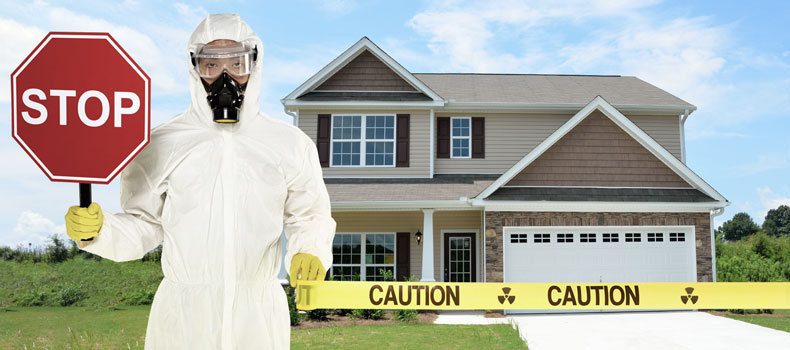
Radon gas is the second leading cause of lung cancer, behind only smoking, and is linked to roughly 21,000 deaths in the United States every year. It's invisible, odorless, and tasteless, making it impossible to detect without specialized equipment. And it isn't only a problem in other parts of the country: the Florida Department of Health reports that about 1 in 5 homes tested in Florida have radon levels above the EPA's recommended action level, with elevated readings found in every region of the state.
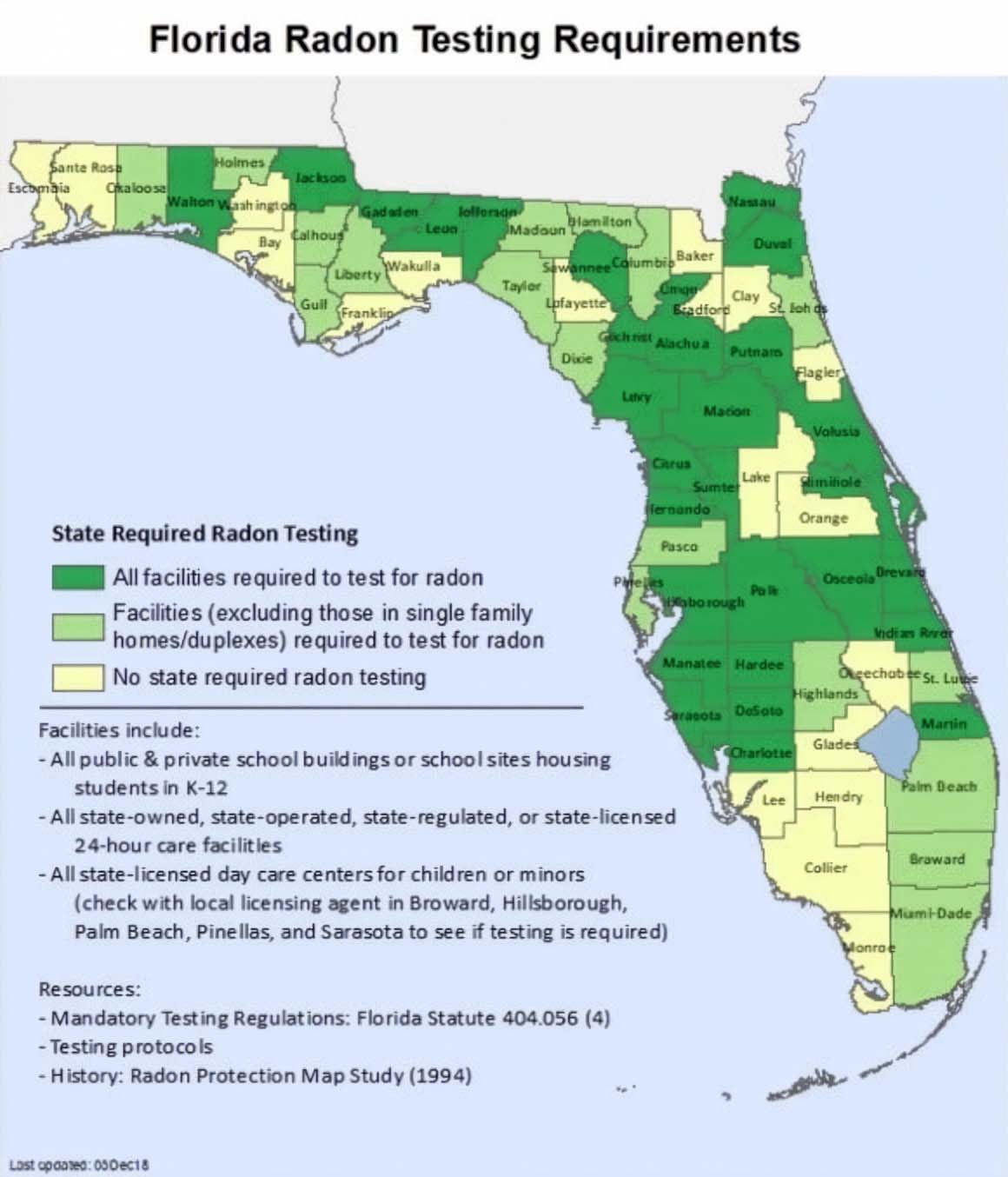
Radon forms naturally as uranium and radium break down in the soil and rock beneath a building, so how much collects inside depends on the specific ground and construction of each home — levels can differ significantly even between next-door neighbors. The EPA places most of Central Florida, including Orange, Seminole, Osceola, and Lake counties, in its lowest predicted-risk zone, while neighboring Polk and Marion counties are rated moderate.
Those maps, though, are broad county-level predictions — not a measurement of your home. Florida's own testing has turned up elevated radon in buildings throughout the state, including in areas with low overall rates, which is one reason Florida law requires radon to be disclosed in every real estate sale and lease. The only way to know the radon levels in your home is to test it.
The first step is to measure the radon concentration in your home. We test using professional-grade equipment placed in the lowest livable level of the home for a minimum of 48 hours to record an accurate average reading. If the result is at or above 4 picocuries per liter (pCi/L), the EPA recommends installing a radon mitigation system. The most common systems use a fan to draw radon from beneath the home and vent it safely outdoors, where it's quickly diluted to safe levels. If you're buying a home, radon testing is easy to schedule alongside your pre-purchase home inspection, so you'll know the radon level before you close.
Yes. Although the EPA's published zone maps rate most of Central Florida as lower-risk, the Florida Department of Health reports that about 1 in 5 homes tested across the state have radon levels above the EPA's action level, and elevated readings have been found in every region of Florida. Since radon depends on the soil and construction of each individual home, testing is the only reliable way to know whether your building is affected.
The cost of a radon test depends on the size and layout of your home and whether the test is bundled with a full home inspection. We're happy to give you an exact quote. Contact us or schedule online for current radon testing pricing throughout the entire Central Florida area.
A standard short-term radon test runs for a minimum of 48 hours. Radon levels naturally rise and fall throughout the day as temperature, air pressure, and weather change, so a single quick reading can be misleading. Measuring continuously for at least two days evens out those swings for a far more accurate average. This short-term test is the method accepted for real estate transactions by both the State of Florida and the U.S. Environmental Protection Agency (EPA).
The EPA recommends taking action to reduce radon whenever the level in a home reaches 4 picocuries per liter (pCi/L) or higher. There is no completely safe level — the EPA suggests considering mitigation even between 2 and 4 pCi/L — and the risk to your lungs grows the higher the level and the longer you are exposed.
Depending on the specific needs of the property, we use one or even two industry-approved testing methods — continuous radon monitors (CRMs) and charcoal scintillation vials — both requiring a 48-hour testing window under closed-house conditions.
Method 1 — Continuous Radon Monitor (CRM): This electronic device measures and logs radon levels hourly, tracking environmental conditions like temperature and barometric pressure to easily detect any potential tampering. When we retrieve the device, we can view preliminary results on-site. Because radon services are strictly regulated in Florida, these preliminary findings are sent through a cloud-based system to a certified Radon Measurement Specialist (RMS) for final sign-off, with the official report typically available the same business day.
Method 2 — Charcoal Scintillation Vials: For this method, specialized vials are deployed for 48 hours to absorb radon from the air. Once the testing window is complete, the vials are securely retrieved and sent to a certified laboratory for analysis. The lab uses a highly sensitive Liquid Scintillation Counter (LSC), which measures the tiny light flashes produced as the absorbed radon decays to calculate exact levels. Because the vials must be shipped and processed, results for this method typically take about three business days.
Looking Glass Property Inspections provides radon testing throughout Central Florida. Those areas include, but are not limited to, Orlando, Winter Garden, Winter Park, Winter Springs, Oviedo, Altamonte Springs, Ocoee, Windermere, Clermont, College Park, Daytona Beach, Flagler Beach, New Smyrna Beach, Lake Nona, Tampa, Clearwater, Dunedin, Indian Rocks Beach, Bellaire, Indian Rocks, Tarpon Springs, Palm Harbor, Oldsmar, Sanford, Deland, Maitland, Kissimmee, Celebration, and most all cities and even remote locations within the Central Florida area. Not sure if that's you? Give us a call at (407) 357-0801 or send us an email.